The top 10 breakthrough marketing moments of 2025 that stopped the scroll
The best brand campaigns of 2025 stopped the scroll. From Spotify Wrapped and Apple's always-on strategy to Duolingo's bold stunt – we rank the top 10 and reveal what they mean for brands in 2026.
December 10, 2025
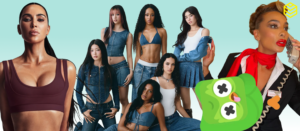
This year’s standout campaigns proved marketing excellence isn’t about budget – it’s about understanding your audience and executing with purpose. From AI-powered innovation to nostalgic storytelling, these top ten brand campaigns demonstrated how to transform products into cultural moments that dominate social media.
1. Spotify Wrapped: The undisputed champion
Spotify transformed annual listener data into a global celebration, achieving what most brands only dream of: making people want to advertise your product. The 2025 campaign featured 50 fan destinations worldwide, including a giant paw installation on Rio’s Copacababa Beach celebrating Lady Gaga and an 800-foot red hair cascade in New York’s Union Square honoring Chappell Roan.
With its ‘visual mixtape’ design referencing pre-streaming culture, Spotify merged nostalgia with digital innovation. The campaign’s genius lies in turning users into brand ambassadors – millions voluntarily shared their Wrapped results, generating organic reach that paid advertising cannot buy.
2. Rare Beauty’s scratch-and-sniff billboards
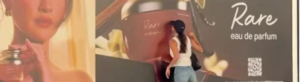
Selena Gomez’s beauty brand launched its first fragrance with interactive scratch-and-sniff billboards across New York City. Partnering with Shopify’s Shop app, the campaign used geogated technology allowing passersby to scan QR codes for free rollerball samples. The activation generated millions of views within days while demonstrating how traditional out-of-home advertising becomes a sampling channel when paired with digital innovation.
3. Gap x Katseye: Strategic ambassador selection
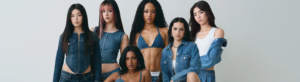
Gap’s collaboration with global girl group Katseye proved that the right ambassador choice transforms campaigns into cultural movements. The six-member group – with members from the Philippines, South Korea, Switzerland and the United States – perfectly embodied Gap’s ambition as an American brand with global reach.
Pairing classic denim with Kelis’ “Milkshake” and choreography by Robbie Blue (known for work with Doechii and Tate McRae), the campaign leveraged participatory content that sparked recreations across social platforms. Gap even extended into Spotify with curated playlists, acknowledging that modern consumers experience brands across multiple cultural touchpoints.
Read more about the campaign’s success here.
4. Canva’s clever creative commentary
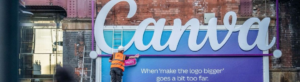
Canva transformed London’s Waterloo Station into a live commentary on design struggles, featuring 14 billboards that turned industry frustrations into feature promotions. One billboard showed the Canva logo blown out of frame with “When make the logo bigger goes a bit too far” – showcasing Brand Kit while speaking directly to designers’ pain points. The billboards became instantly shareable content as commuters photographed and posted the witty copy, turning static outdoor advertising into viral social moments.
Created with Stink Studios, the campaign succeeded by demonstrating product capabilities through relatable creative problems rather than traditional tech specs, earning attention without begging for it.
5. Kylie Cosmetics’ “King Kylie” revival
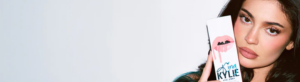
Celebrating its 10-year anniversary, Kylie Cosmetics revived the “King Kylie” era – the teal-haired, matte-lipped aesthetic from 2015-2016 that originally launched the brand. After asking fans in 2022 what they wanted, Jenner delivered three years later with fan-requested elements including metallic lip glosses, skull packaging and discontinued classics like “Dead of Night.”
The campaign launched with a Snapchat video of Jenner in handcuffs entering a police station, directly referencing how she originally promoted lip kits. Jenner even released “Fourth Strike,” her debut song referencing decade-old speculation, creating a full-circle cultural moment that proves nostalgia marketing works when brands genuinely listen to their community.
6. Apple’s #ShotOniPhone: Product as creator tool
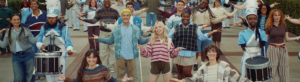
Apple elevated its long-running “Shot on iPhone” campaign with the iPhone 17 launch, introducing the device in its vivid OG orange colorway through Dua Lipa. The campaign’s brilliance lies in its narrative extension – showcasing enhanced zoom capabilities through content captured by fans at Billie Eilish concerts and other live performances.
Apple also launched a powerful accessibility campaign highlighting features that make the iPhone genuinely inclusive and functional for students of all abilities. From AssistiveTouch to voice control, the “Designed for Every Student” initiative proved that technical innovation serves humanity best when it removes barriers. The campaign exemplifies Apple’s mastery: putting product at the center without trying hard, letting user-generated creativity and purposeful design speak louder than any marketing copy.
Read more about the campaign’s success and impact on Apple’s social performance in our Social Media Report – Consumer Electronics.
7. Facebook Secret Santa: Reconnecting through nostalgia

Facebook tapped into universal longing for simpler times with its Secret Santa campaign, reminding users of the platform’s original magic – genuine human connection. The campaign focused on the joy of giving and surprise, positioning Facebook as the facilitator of meaningful moments rather than just another scroll destination.
By centering on a beloved tradition that transcends digital noise, Facebook successfully reminded audiences why they joined the platform: to connect with people who matter. The emotional storytelling cut through algorithm fatigue, proving even tech giants can win hearts by returning to fundamental human experiences.
8. MAC Cosmetics meets Jet2holiday
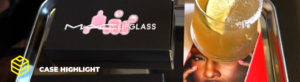
MAC Cosmetics partnered with Jet2holidays in an unexpected cross-sector collaboration, offering customers the chance to win £1,000 holiday vouchers alongside £250 MAC bundles and makeup services. While less theatrical than other campaigns, the partnership demonstrates how beauty brands expand beyond traditional category boundaries to create lifestyle experiences, positioning MAC as part of customers’ broader aspirational lifestyle.
We got to be a part of it: Together with MAC Cosmetics, we transformed a decommissioned aircraft into a fully immersive beauty experience. Influencers and MAC Crew members were invited and selected influencers were cast as MAC airline staff to bring the travel concept to life with theatrical flair. The iconic voice of Jet2Holiday flight announcements was hired for in-flight messaging, adding nostalgic humor and recognition.
9. Duolingo’s death of Duo

Duolingo killed its mascot. Between February 4-17, 2025, Duo was mentioned 169,000 times online, with mentions spiking 25,560% on announcement day. The campaign evolved from an app icon change showing X’s over Duo’s eyes into an elaborate murder mystery featuring death by Cybertruck.
Users were challenged to collectively earn 50 billion XP to “revive” Duo – ultimately achieving over 50.9 billion XP across 15 countries. The campaign generated 1.7 billion impressions and twice the social conversation of 2025’s top Super Bowl ads. Dua Lipa’s organic reshare alone generated 667,000 engagement actions. The campaign worked because it was authentically on-brand for Duolingo’s irreverent social identity while driving genuine product engagement.
10. NikeSKIMS: Performance meets lifestyle
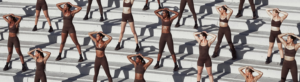
The NikeSKIMS collaboration launched with theatrical flair, featuring a “Bodies at Work” performance on New York Public Library steps with models in choreographed routines. Kim Kardashian, Khloé Kardashian and Kris Jenner attended in coordinated looks, alongside athletes including Serena Williams.
Spanning seven collections and 58 silhouettes with over 10,000 combinations, the partnership positioned itself where performance and cultural influence converge. The launch transformed product reveal into cultural spectacle, with an exclusive dinner turning attendees into content amplifiers.
The trend: User-generated creativity meets purposeful storytelling
These viral marketing campaigns demonstrate that successful marketing in 2025 creates moments people want to participate in, not just consume. Apple’s “Shot on iPhone” succeeds by making the phone invisible and the creator visible – real fans capturing concerts generate more authenticity than any professional content.
Experiential activations designed for social amplification proved that earned media through shared moments outperforms traditional paid placements. From Rare Beauty’s scratch-and-sniff billboards to Duolingo’s elaborate death hoax, brands engineered experiences specifically for social feeds.
Most importantly, authenticity trumps perfection. Duolingo’s unhinged approach, Canva’s self-deprecating billboards and Kylie’s genuine community co-creation succeeded because they understood their audiences deeply and spoke without pretense.
What this means for brands in 2026
The lesson is clear: having a product is no longer enough. The product must become a story, told where audiences actually are – online, across platforms, in formats they want to share.
Every winning campaign understood that social media marketing isn’t an advertising channel – it’s the primary stage where cultural moments happen. Spotify engineered 50 physical installations knowing each would generate thousands of social posts. NikeSKIMS created theatrical performance designed to dominate feeds. Apple’s accessibility campaign demonstrated how technology changes lives rather than listing features.
For 2026, marketing strategy and social strategy are inseparable. The campaigns that dominated 2025 built entire activations around social behavior. Duolingo’s week-long turnaround allowed them to capitalize on cultural moments as they happened. Gap’s choreographed content invited participation. Apple turned users into creators, understanding that the best brand content is content users make themselves.
The winners prove that social-first thinking requires specialist expertise. These weren’t campaigns translated for social – they were conceived in social language. Understanding platform-native behavior, creator culture, and earned media value demands teams who can execute in days, not months.
As we move into 2026, the competitive advantage belongs to brands that treat social as strategic infrastructure, not tactical execution. The question isn’t whether your product deserves attention – it’s whether you’re telling its story where attention lives, in formats that invite participation, executed by teams who understand platform dynamics as deeply as your brand.
The opportunity is clear: brands with great products but mediocre social media strategies will lose ground to competitors who understand that in 2026, the story and its social amplification matter just as much as the product itself.
Get our full trend predictions for 2026 here.
We make advertising meaningful.