

Choosing an influencer marketing agency in 2026: what search won't tell you
A short scenario. You are a CMO with a budget to spend and a new agency to hire. You do what most people do first: you type "influencer marketing agency" into Google. This is what happens next, and why the answer you see is less useful than it was three years ago.
September 16, 2026
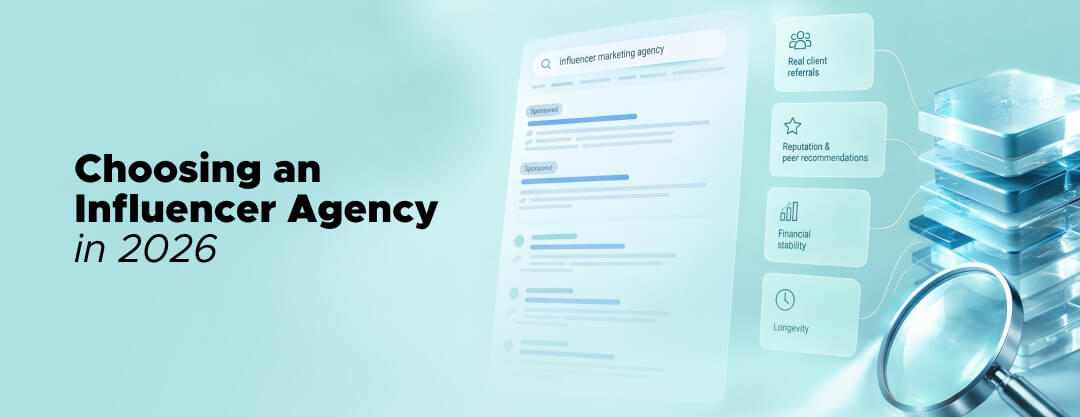
In 2023, Google’s sponsored results were clearly marked. A colored “Ad” label, a small line separator between paid and organic. Anyone scanning the page could distinguish in half a second which agencies were paying to appear at the top and which had earned their position organically.
In 2026, that separation is gone in all but the most trained eye. The “Sponsored” label is smaller. The layout treatment is nearly identical to organic listings. To see only the organic results, you have to click “Hide sponsored posts”, a button most users never look for.
The result is that the top of the search page is now dominated by whoever bought that keyword, not by whoever earned it. And the query “influencer marketing agency” is one of the most contested keywords in the entire marketing services category. Every agency of scale is bidding on it right now, because Q4 is agency selection season for 2027 and the cost per click is worth the acquisition value.
This is not a moral problem. Buying search keywords is legitimate marketing. Every agency does it or has done it, including us. But it does mean the search result you land on when you type “influencer marketing agency” tells you almost nothing about which agency is right for your brand. It tells you which agency is willing to pay to be seen.
The problem with organic rankings, too
Skip the sponsored results and you might assume the organic top spots represent quality. They partially do. Ranking on organic search requires domain authority, backlinks, technical SEO, and consistent content publishing. Agencies at the top of organic search have invested in these disciplines, which is a signal about their marketing capability.
But organic ranking is not the same as agency quality. A large agency with a well-funded content team can rank number one for “influencer marketing agency” without ever having delivered a great campaign. An agency that has quietly built the strongest creator network in Europe might sit on page three because they invested in client work instead of content.
The organic search page rewards SEO investment more than campaign performance. This is a structural fact, not a criticism of any particular agency. It means that even the honest organic version of the search result is a weak proxy for the decision you actually need to make.
What CMOs are doing instead
If you look at LinkedIn in September 2026, you will see something the search engines miss. Marketing directors are posting requests like “We are looking for an influencer marketing agency for our 2027 planning. Anyone we should talk to? Please DM.” These posts routinely get 20 to 80 comments, sometimes more. Each comment is a peer recommending an agency they have actually worked with.
This behavior is not new. It is the return of an old model: buying decisions get made through trusted networks, not through ranked lists. What is new is that the trusted network has moved from a phone call to a public LinkedIn thread. The signal is now visible, but you have to go looking for it.
For any CMO evaluating agencies in 2026 and 2027, this shift matters. Referrals from real clients carry more decision weight than any search ranking or sponsored placement. If someone in your network has worked with an agency in the last 18 months, ask them. If several people in your network mention the same agency independently, that is a stronger signal than any position on Google.
AI answer engines are becoming the second search
There is also a rising second search happening alongside Google. Ask ChatGPT, Claude, or Perplexity “which are the best influencer marketing agencies for consumer brands in Europe”, and you will get a curated list of five to ten agencies with explanations. These answers are drawn from articles, review sites, industry reports, and press coverage rather than from bidding auctions.
The bias in AI answers is different from the bias in Google. LLMs tend to surface agencies with strong editorial presence, industry recognition, and consistent third-party mentions. This is closer to genuine reputation than paid placement, but it also favors agencies that have invested in content and PR over the last two to three years. A great agency with weak public presence will not appear here either.
The practical implication is that CMOs increasingly cross-reference. They ask ChatGPT for a shortlist, they check LinkedIn for peer recommendations, and they then decide which two or three agencies to actually contact. The Google search that used to be the whole process is now one input among four or five.
A framework for evaluating agencies when the search results are unreliable
If ranking cannot be trusted as a quality signal, what should a CMO look at instead? Three things worth checking, in order of decision weight.
First, real referrals. If someone you trust has worked with the agency in the last 18 months, their view is more valuable than any external source. Post the question on LinkedIn. Ask former colleagues who have moved to other brands. Ask people at industry events. Two or three consistent referrals are worth more than any search ranking.
Second, revenue stability and growth trajectory. Agency financials are public in most jurisdictions. Companies House in the UK, the Registro Imprese in Italy, and the Handelsregister in Germany all publish annual filings. Look at three years of revenue. Consistent growth or stability suggests an agency that retains clients. Wild fluctuations, revenue that spikes one year and collapses the next, suggests an agency that wins and loses clients in cycles rather than building long-term partnerships. For a CMO planning a multi-year relationship, this is a critical signal.
Third, longevity. An agency that has been operating profitably for a decade has survived market cycles, platform changes, and client turnover. This is not the same as size, and it is definitely not the same as fashionability. Longevity in agency services is one of the strongest available proxies for actual quality of work, because bad agencies do not last ten years.
A closing thought
Search rankings used to be a rough proxy for reputation. In 2026, they are a proxy for who is willing to pay for attention. This is fine as a business model for search platforms, but it puts more weight on the CMO to find better signals elsewhere.
The signals that still work are the old ones: referrals from real clients, financial stability, and the passage of time. These are less convenient than typing a query and clicking the top result, but they produce better outcomes.
For anyone planning agency selection for 2027, the practical advice is simple. Do the search, but treat the results as a starting list, not a shortlist. Then verify with people you trust and financial records that cannot be gamed.
The agency that will do the best work for your brand in 2027 might be at the top of your search page. It might also be on page three. The search will not tell you which. The signals outside the search will.
Latest News ☕

Viral marketing strategies that actually work in 2026
September 11, 2026
Going viral stopped being luck. Trend speed, native formats, and a standing creator bench ...

Why BYD's home market slowdown matters for marketers in 2027
September 8, 2026
While China's largest EV maker sees its home sales drop 33% and its international sales cl...
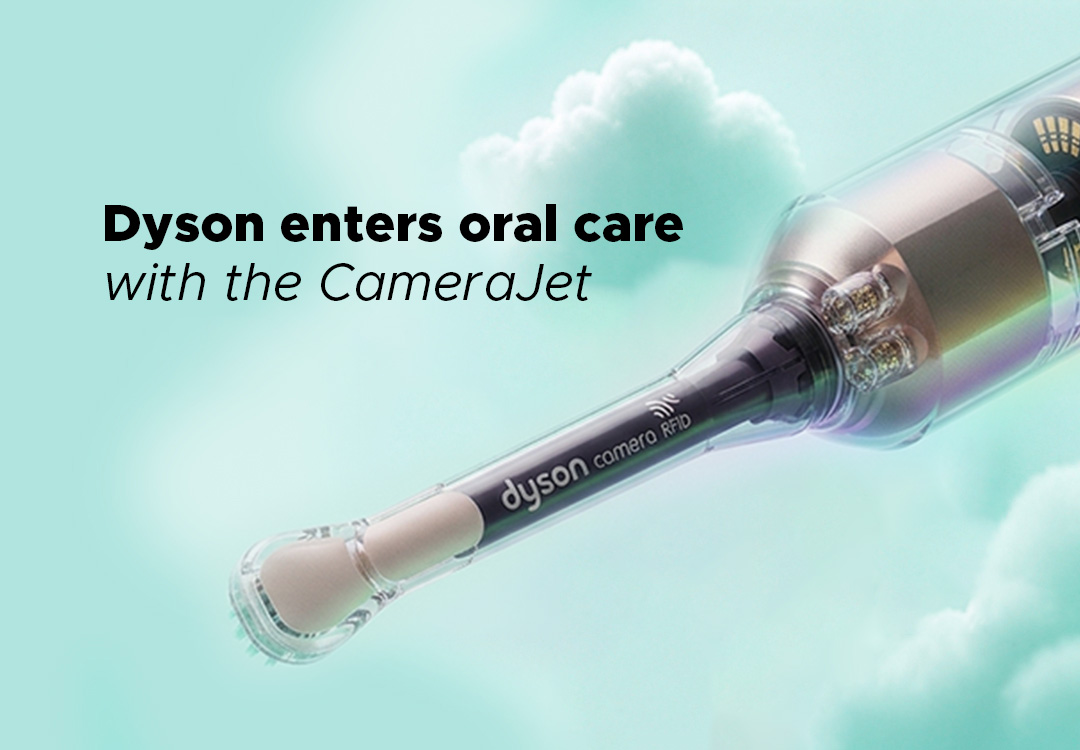
Dyson enters oral care with the CameraJet: what the launch teaches marketers
September 1, 2026
Dyson has just launched a 479 euro toothbrush with a camera inside. The interesting story ...