Best Marketing Campaigns 2026 So Far
The standout brand campaigns of the first half of 2026 were fast, playful and built for people to join in. From KitKat's stolen chocolate to Uber Eats' build-your-own Super Bowl ad, here are the five that mattered most, and what…
August 14, 2026
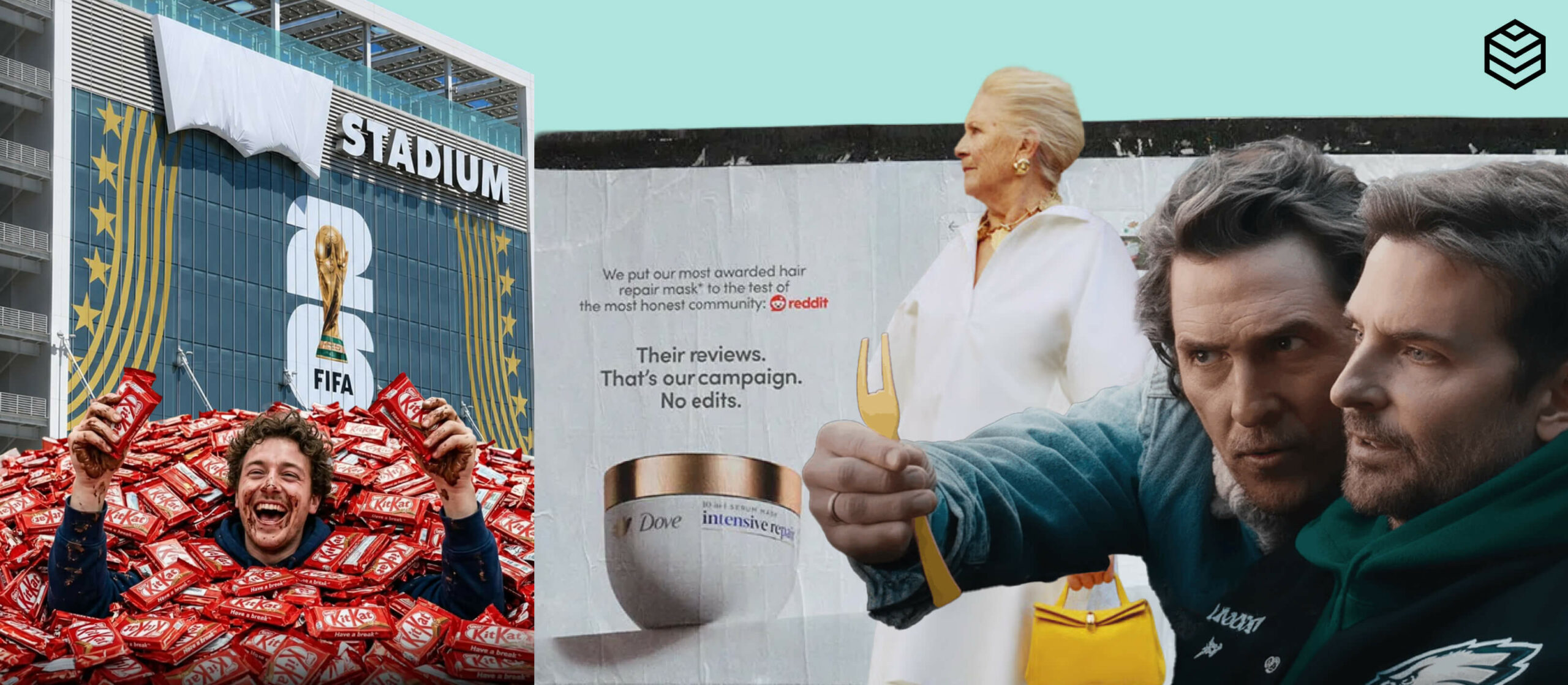
Not much of the best marketing work this year looked like advertising. It looked like trackers, in-app toys, tarpaulins, Reddit threads and one 79-year-old woman from Provence.
That shift showed up clearly at Cannes Lions in June, where entries dropped 25.5% to 20,050 after the festival tightened its integrity rules. The prizes went almost entirely to work built for people to participate in rather than sit through.
A quick word on how we chose. We looked at three things: evidence of real commercial impact, social-first execution, and whether the lesson is one another brand could actually copy. Awards helped inform the list, but they didn’t decide it. Our top 10 marketing campaigns of 2025 used the same framework, and the through-line is holding.
One thing to flag before we start. This is a first read, not a final verdict. It covers January to July, and there’s a lot of 2026 still to play out. As we do every year, we’ll publish the definitive ranking of the year’s best marketing campaigns in December, once all twelve months are in.
Here’s what defined the first half of the year.
1. KitKat’s “The KitKat Heist”: crisis comms, played backwards
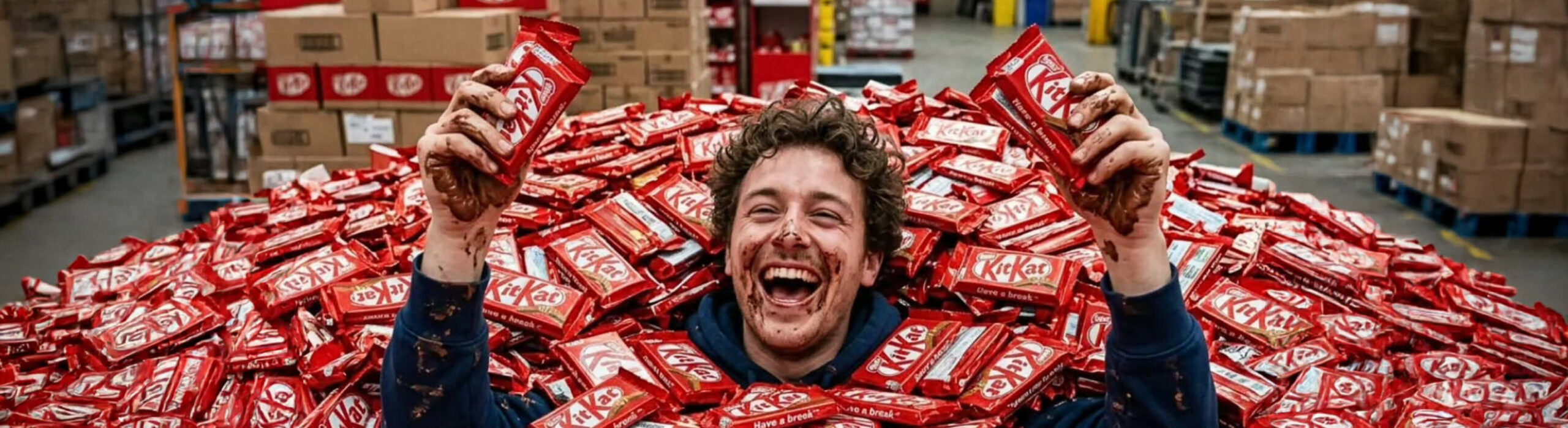
On 26 March, a truck carrying 413,793 KitKat bars went missing somewhere between Italy and Poland. Twelve tonnes of Formula 1 special edition stock, gone, a week before Easter. For a chocolate brand, losing your peak inventory before your biggest weekend of the year is close to a worst case scenario.
Nestlé, with VML and Burson, did the opposite of what the crisis playbook says. They announced it. Publicly, on KitKat’s own channels, written in the brand’s normal voice rather than stiff corporate language. Because it landed days before April Fool’s, half the internet assumed it was a stunt, which only pushed the story further.
Then came the clever bit. On 1 April, KitKat launched the Stolen KitKat Tracker. Anyone holding a KitKat could type the eight-digit batch code from the wrapper into a tool and find out whether their bar was part of the missing shipment. A supply chain disaster turned into a global detective game.
What it delivered, in ten days:
- $224 million in earned media, which is Nestlé’s own estimate of what the equivalent advertising would have cost. Actual media spend: zero.
- More than 6,000 articles worldwide, and a 31% share of voice across 93 markets.
- 44% share of view on Meta across Easter, close to triple its nearest competitor.
- Daily social video views up from around 1 million to 29 million.
- 2.2 million engagements on the tracker, which flagged three suspicious batch codes and produced one lead now sitting with police.
- More than 115 brands joining in organically, including Domino’s, KFC and Ryanair.
- The PR Grand Prix at Cannes, plus four Golds.
Why it worked. A story that good spreads on its own. KitKat worked that out early, stopped trying to contain it, and then gave people something to do with all that attention. The tracker is what turned a news cycle into 2.2 million actual interactions, and it cost almost nothing.
2. Uber Eats’ “Build Your Own Super Bowl Commercial”: the ad became the product
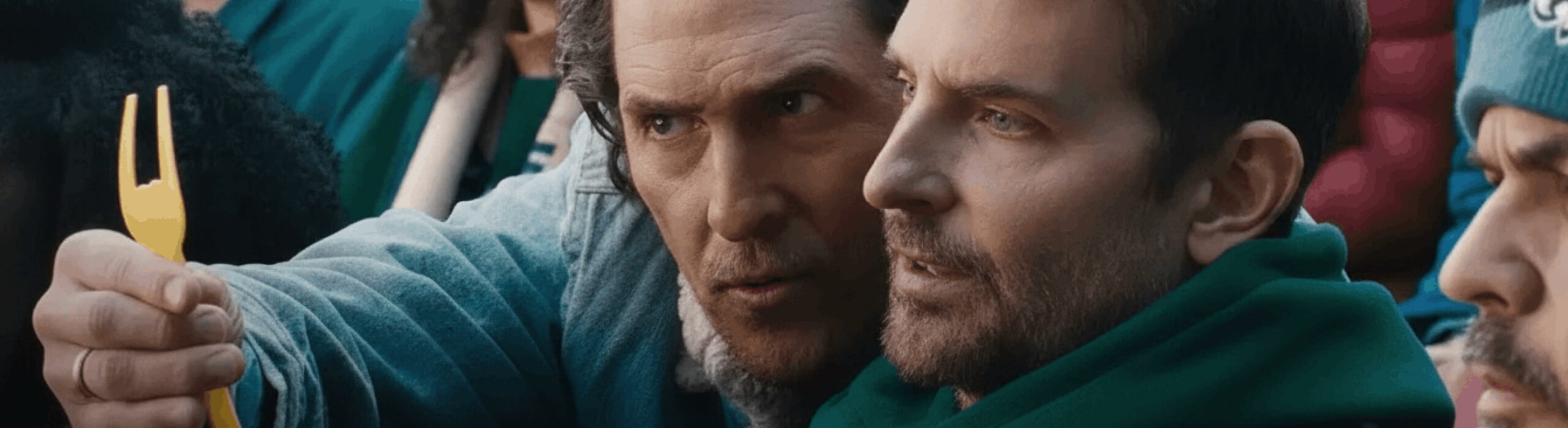
Uber Eats had spent two years running with a daft premise: that American football exists purely to sell food. For Super Bowl LX, instead of buying one 60-second spot and hoping people remembered it on Monday, Special US and Special Australia rebuilt the whole idea inside the app.
A week before the game, “Build Your Own Super Bowl” appeared in the app like any other storefront. You browsed a menu of “ingredients”, each one unlocking a different scene, joke or celebrity cameo, and assembled your own version of the commercial exactly the way you’d build a burrito bowl. Matthew McConaughey, Bradley Cooper, Addison Rae and Sauce Gardner all featured. The team engineered more than 1,000 possible combinations out of 36 hours of unaired footage. Finish a build, unlock a Game Day deal.
What Uber Eats reported:
- Its best ever Super Bowl sales, beating the previous record by more than $36 million.
- 325,000 people built their own commercial.
- 800,000 minutes spent inside the experience: roughly 16.5 million seconds of fan-made advertising.
- 3.7 million extra app visits across Super Bowl week.
- Over $290 million in earned media value, about 30% up on its previous best.
- 38% deal redemption, converting ten times better than past promotions.
- Over 40% of participants weren’t regular users.
It won the Media Grand Prix at Cannes and a Direct Gold. The Media jury said it collapsed the funnel by turning the product itself into the communications platform.
Why it worked. Most Super Bowl work buys attention and hopes it shows up as sales later. This put the creative inside the place where people actually order food, so the watching and the buying happened in the same few minutes. And the customisation mechanic wasn’t invented for the campaign. It borrowed a behaviour users already do in that app every single day. It’s the same principle we saw work for AliExpress during Euro 2024, when a livestream with Rio Ferdinand and Raphaël Varane pulled 400,000 concurrent viewers by dropping brand storytelling inside the shopping surface itself.
3. Dove’s “r/eal reviews”: letting the community write the copy
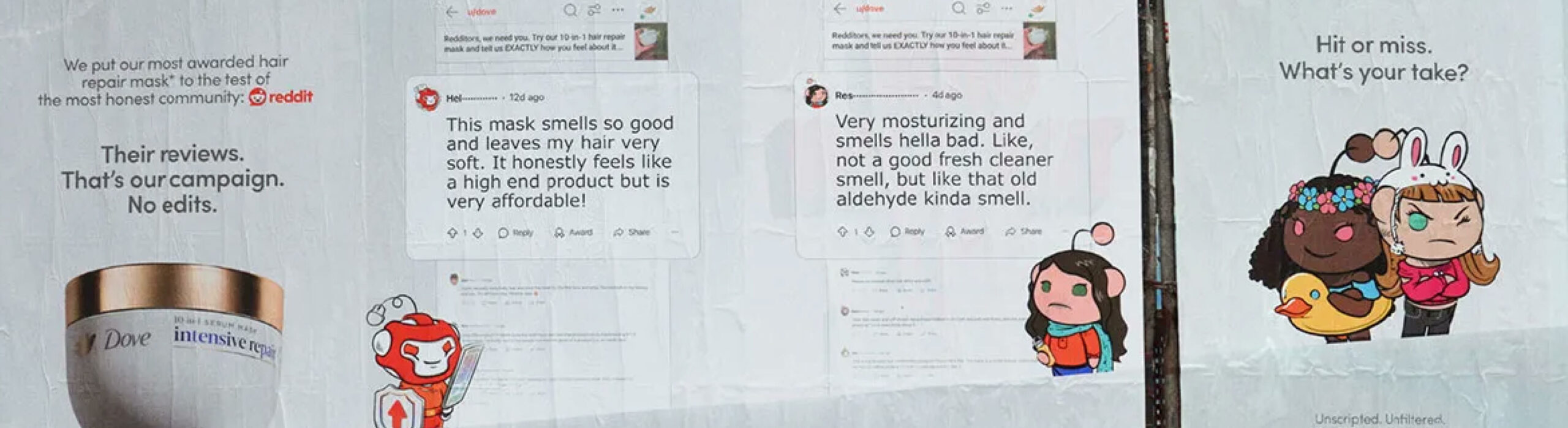
In February, Dove did something most beauty brands would call reckless. It asked Reddit, possibly the harshest audience on the internet, to review its Intensive Repair 10-in-1 Serum Mask, and promised upfront to publish the first 50 responses word for word, unedited.
Then it actually did it. The glowing ones and the ones complaining that the mask smells like an old lady. DAVID London, working with AKQA Paris and WPP Media, ran those verbatim comments as the creative across out-of-home, film, digital, social and magazine sampling. In some placements the comments typed themselves out letter by letter in real time. A New York pop-up blew the threads up into physical installations, with sampling stations next to them so people could form their own view on the spot.
The important detail: Dove didn’t manufacture the conversation. Redditors had already been talking about the mask after its relaunch. The brand built on something that was happening anyway instead of inventing a hashtag and hoping.
What Unilever reported:
- Over 1 billion impressions.
- Hour-long queues at the New York pop-up.
- A meaningful lift in how often Dove showed up in LLM search results during the campaign.
- High single-digit growth for Unilever’s Hair Care category in Q1.
Why it worked. Publishing bad reviews is an expensive signal. It only makes sense if your product genuinely holds up, and audiences read it exactly that way. There’s a second thing worth noticing here. By feeding real community content into the internet, Dove got surfaced more often inside AI-generated answers. That’s where discovery is heading, and we dig into it further in our piece on what authenticity actually means in creator marketing.
4. Levi’s “Nobody’s Gonna Know”: the World Cup campaign FIFA accidentally commissioned
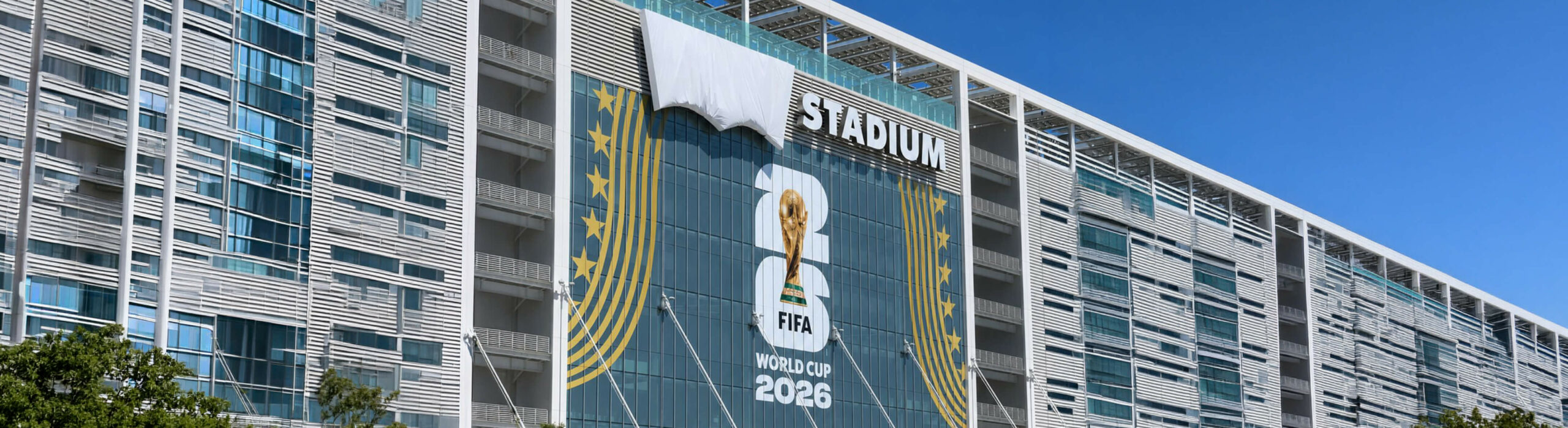
FIFA’s clean venue rules mean every host stadium has to strip out branding that doesn’t belong to an official sponsor. So for the summer, Levi’s Stadium in Santa Clara became “San Francisco Bay Area Stadium”, and Levi’s, which pays $17 million a year for those naming rights, had to throw a white tarp over its own logo.
Small problem for FIFA. The batwing is so recognisable that the tarp just traced its outline. Covering it made it more noticeable, not less.
Levi’s went all in on the joke. It swapped its social profile picture for the covered logo, posted stadium clips captioned “Welcoming the world to the beautiful [redacted] stadium!” over the “Nobody’s Gonna Know” TikTok sound, then draped white sheets over its own shopfronts in Paris, London, Hong Kong, Mexico and Brazil. A few weeks later it turned the whole thing into a product: the $35 “Nobody’s Gonna Know Logo Tee”.
What it delivered:
- Footage of the tarpaulin became a nine-million-view TikTok.
- The profile picture switch landed in front of the brand’s 10.3 million Instagram followers and travelled well beyond them.
- A $35 T-shirt that exists purely because a compliance requirement went viral.
Levi’s is not a World Cup sponsor. Official partners paid into a sponsorship pot worth an estimated $2.8 billion for this tournament. Levi’s spent nothing extra and still spent the group stage in the conversation.
Why it worked. Speed, mostly, plus a team that didn’t take itself too seriously. There was no production budget and no media buy here. Somebody just spotted that a constraint was actually a gift and had the authority to act on it within hours. It also proves something useful about brand assets: the strong ones are the ones people can finish in their own heads.
5. Jacquemus and Liline: the anti-celebrity ambassador
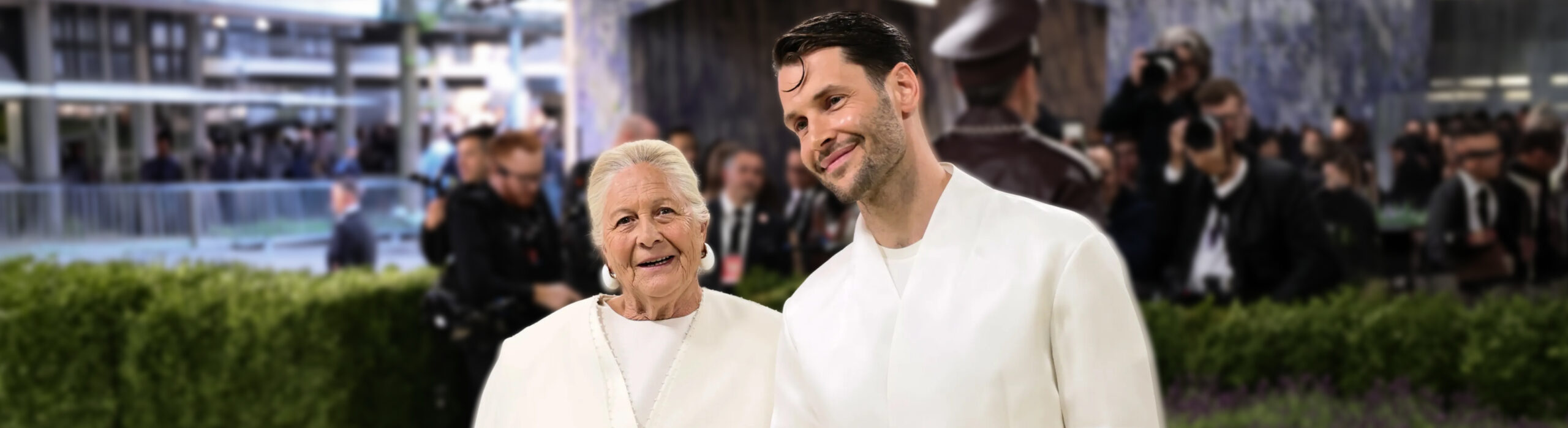
On 23 January, Simon Porte Jacquemus teased that he was about to name the brand’s first ever ambassador. The internet did what the internet does and started guessing supermodels and pop stars.
He announced his 79-year-old grandmother.
Liline Jacquemus was born in 1946 and grew up in a farming family in Alleins, a village in the south of France. She had already appeared in a Jacquemus campaign shot at home during the 2020 lockdown, so for anyone paying attention this wasn’t out of nowhere. It just made official what the brand’s audience already understood, which is that the whole aesthetic comes from Provence and family rather than a casting spreadsheet.
The announcement came with a tongue-in-cheek ambassador contract. Full look at all times. No mentioning rival houses. No collaborations of any kind, because she isn’t a trend, she’s a commitment. It landed days before the Le Palmier show.
Context matters here. This is a brand that has cast Jennie, Kendall Jenner and Bad Bunny. It could have signed almost anyone. It chose the one person no competitor could ever sign.
Why it worked. Ambassador decisions usually come down to reach maths. Jacquemus treated it as a question of where the brand comes from, and got something reach can’t buy: a choice nobody can copy, that needs no explanation, and that sits perfectly with ten years of storytelling. In a luxury market still obsessed with youth, it read as a real position rather than a stunt. We looked at a similar principle from another angle in our breakdown of why the right ambassador stops the scroll.
Two more worth your time
Heineken, “Could Have Been a Heineken”. A WhatsApp bot that let you forward any voice note longer than three minutes and get back a free beer voucher plus a map of nearby bars. It piloted in Brazil, where people send four times more voice notes than the global average, and scaled through 2026. LePub Milan and LePub São Paulo took the Social and Creator Grand Prix for it, plus five Golds. Heineken went home as Creative Brand of the Year with 31 Lions across six brands, and LePub Milan as Agency of the Year with 26.
Claude, “Ads are coming to AI. But not to Claude.” Anthropic’s Super Bowl debut, made by Mother London, won the Film Grand Prix. Four spots in which friendly AI assistants suddenly pivot mid-conversation into sponsored pitches, aimed squarely at a competitor’s advertising plans. Sam Altman responded publicly, which only spread it further. It drew over 69,000 Claude mentions on X, roughly twice the penetration you’d expect for a brand that size.
The pattern: everybody gave something up
Line these five up and the thing they share isn’t budget or category or format. It’s that each brand handed over a bit of control on purpose.
Reacting beat planning. KitKat and Levi’s produced two of the year’s biggest brand moments without a media plan between them. Both had teams who could respond in hours instead of routing everything through three weeks of approvals. Speed isn’t an operational nicety any more. It’s a creative capability, and it needs staffing like one.
Participation was wired to conversion. Uber Eats and the KitKat Tracker both worked because the engagement mechanic sat right next to the thing you could buy. A tracker, a builder, a voucher bot. Each turned attention into one specific action, and every action was countable.
The audience wrote the ads. Dove’s single most effective creative asset in the first half of the year was a stranger moaning about how a hair mask smells. Brands that treat their community as a source of material, rather than a target to aim material at, bought trust that no production budget can fake.
Casting became positioning. Jacquemus showed that the best ambassador isn’t the one with the biggest following. It’s the one your competitors can’t have.
Earned media beat paid. KitKat’s $224 million, Uber Eats’ $290 million, Levi’s outperforming official World Cup sponsors from underneath a tarpaulin. All of it with minimal or zero extra media money. With budgets still tight, the best work this year made its own distribution.
What to do with all this: three things for brands in 2026
Build the mechanic, not just the message. Every campaign here gave people something to do. The better question for your next brief isn’t “what do we want to say”, it’s “what do we want people to make, check, build or share”.
Staff for reacting. KitKat and Levi’s each had a window of maybe a few hours. That kind of response isn’t luck. It comes from social teams with agreed authority, clear tone guidelines and permission to publish without a full sign-off chain. If your brand couldn’t have posted KitKat’s announcement inside 24 hours, that’s your gap.
Pay attention to where discovery is moving. Dove’s lift in LLM search visibility is the detail most people skimmed past, and it’s probably the one that matters most by next year. More and more, people meet brands through AI-generated answers, and those answers get assembled from community conversation, earned coverage and third-party sources rather than your own advertising. Campaigns that create genuine conversation now keep paying you back inside the tools people use to make decisions. Our recent piece on why brands are paying TV-level prices for creator content in 2026 covers where that shift is heading next.
Frequently Asked Questions
What was the biggest marketing campaign of 2026 so far?
By earned media value, Uber Eats’ Build Your Own Super Bowl Commercial led the first half of 2026, generating $290 million in earned media value alongside its best-ever Super Bowl sales. KitKat’s The KitKat Heist followed closely with $224 million in earned media across 93 markets in ten days.
Which marketing campaigns won at Cannes Lions 2026?
The 2026 Cannes Lions Grand Prix winners included KitKat’s “The KitKat Heist” (PR), Uber Eats’ “Build Your Own Super Bowl Commercial” (Media), Heineken’s “Could Have Been a Heineken” (Social and Creator), and Anthropic Claude’s “Ads are coming to AI. But not to Claude.” (Film). Heineken took Creative Brand of the Year with 31 Lions.
What do the best 2026 campaigns have in common?
The five campaigns that defined the first half of 2026 shared a willingness to hand over control. Each was built for participation rather than passive consumption, wired engagement directly to conversion, and generated earned media at scale with minimal or zero media spend.
How is AI changing marketing campaigns in 2026?
AI is reshaping campaigns in two ways. First, on the input side, AI-powered production is compressing timelines from months to days. Second, on the discovery side, LLM search results are becoming a major traffic source, which means campaigns that generate genuine community conversation now keep paying back inside AI-generated answers.
The thread running from our top 10 marketing campaigns of 2025 is still here, just sharper. Social isn’t the channel you push campaigns through. It’s where they get built, and increasingly it’s the raw material your brand’s reputation gets rebuilt from somewhere else entirely.
That’s the half-time read. We’ll be back in December with the definitive list of the best marketing campaigns of 2026, once the second half has had its say. If something from the last six months should be on it, tell us.
Get the fuller picture on where social is going in our 2026 social media trends report.
About Pulse Advertising
Pulse Advertising is one of the largest independent global influencer marketing and social media agencies in 2026, with 11 offices across Europe, North America, the Middle East and Asia and 125+ people. We run multi-country campaigns for consumer brands including Apple, Nestlé, Coca-Cola, BMW, Bulgari, Yves Rocher, Ray-Ban and Velux. Fully independent, with no holding group above us, we build social-first campaigns designed for participation, and move at the speed those campaigns need. We measure what they’re worth with PI Metrics, our proprietary AI platform for cross-market campaign performance measurement.
We make advertising meaningful.